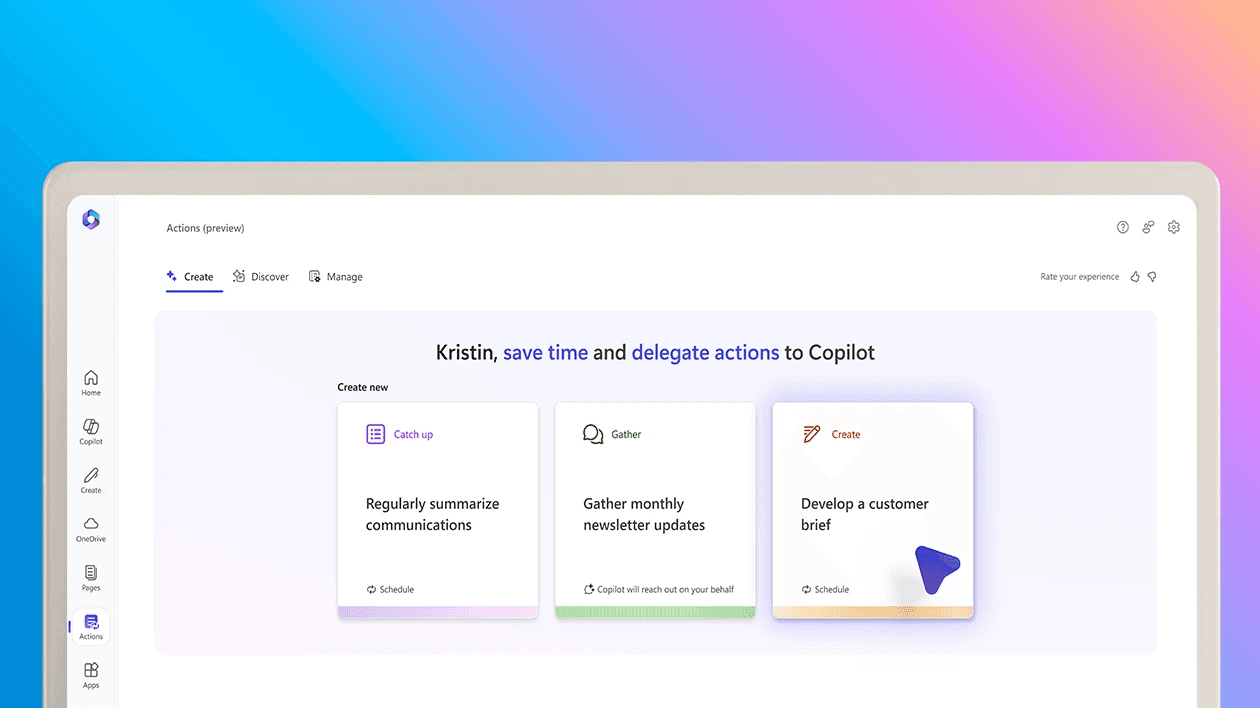
In May 2024, the annual Work Trend Index Report, produced jointly by Microsoft and LinkedIn, was published. The report examines how AI is changing work and the labor market. The surprising finding was that, when it comes to AI adoption, employees are ahead of their companies, bringing their own AI to work without the training and data protection they need. Among small and midsize businesses (SMBs), this is even more common, which makes it urgent for leaders to get moving and develop a plan to integrate AI responsibly. Below are some key takeaways from the report and actions that SMB leaders can take to get ready and capture the benefits of AI.
It is critical for leaders to keep up with AI
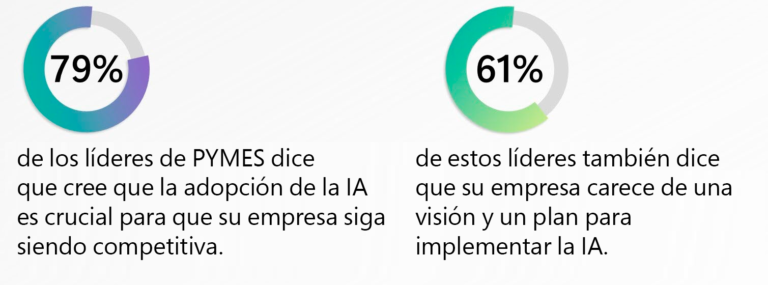
Many SMB employees around the world are already using AI tools. But even though SMB leaders agree that adopting AI is critical to staying competitive, 61% also say their company lacks a vision and a plan for implementing AI.
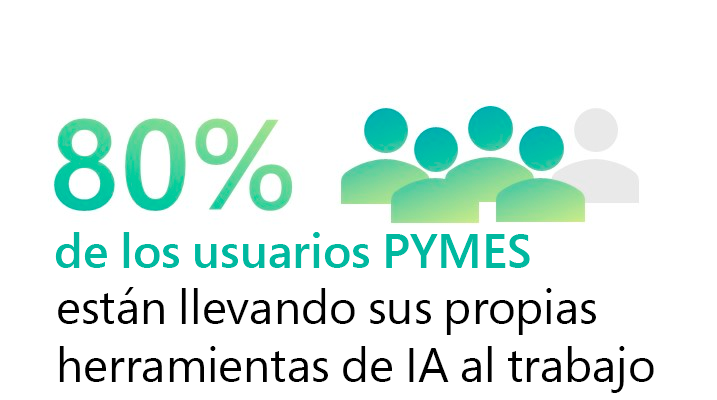
SMB employees are taking matters into their own hands and keeping their use of AI at work under wraps, with 80% of SMB employees bringing their own AI tools to work. And yet, 49% are reluctant to admit that they use AI for their most important tasks.
This gap between vision and reality highlights an opportunity for business leaders to build a comprehensive AI strategy for their business, one that results in more time to focus on customers, products and services.
SMBs and their competitive advantage in the age of AI
SMB leaders are looking for AI-savvy individuals to fill roles within their companies, and more than 60% say they would not hire someone without AI skills.
79% of SMB employees believe AI skills will give them more job opportunities; providing training and driving AI adoption is key to retaining employees and attracting new talent. Employees and leaders agree: building AI skills is essential.
Copilot at work: how AI is helping Joos.
AI can be a game changer by helping you and your team save time so you can focus on what matters most to you and your business. One example of AI's impact on an SMB organization is Joos, a mobile charging station provider based in the United Kingdom but with a growing international footprint despite its relatively small team.
Because Joos's leaders deployed Copilot for Microsoft 365 and made it available across the entire organization, it quickly helped streamline operational tasks, freeing up their staff to focus more on customers.
Since integrating Copilot, our customers have benefited from faster email responses and more personalized interactions, as Copilot allows us to better understand and anticipate our customers' needs.
— Jeannette Ikonga, Head of Client Success and Customer Experience at Joos
How SMBs can adapt to AI
The opportunity for SMB leaders is to channel employee enthusiasm for AI into business transformation. This plan will look different for every business, but here is how to get started:
Begin by identifying a business problem and then applying AI to it. There are efficiency gains to be had across every function: the key is choosing the right process. To make this easier, identify the employees who are excited about AI, form a small group with them and use them as your AI champions. Once you have chosen a process, make sure you can track its impact. For example, if you are applying it to customer service, track how quickly calls are handled and how that success affects other parts of your operation.
Integrate AI tools across your organization. Use AI within your existing infrastructure so it can deliver personalized, relevant and actionable responses. To better manage data protection and privacy policies and practices, choose AI tools that can easily be used with the existing security measures in your business infrastructure. And run a quick privacy audit before you begin the rollout to make sure your data is labeled correctly, so that only the people who should see a file have access to it.
Take both a top-down and a bottom-up approach. Moving from experimentation to transformation requires commitment across the organization. Because SMB employees tend to have a closer relationship with their leadership, you should make sure your plan aligns with the vision you have already promoted. It should contain a clear, guided process that everyone can follow to turn on AI for their teams and in their daily work. Your AI champions can be an invaluable help here, promoting your plan, making sure rollouts go smoothly and encouraging employees to build their AI fluency so that they can eventually use AI more creatively. You will want to deploy AI broadly across functions and a variety of roles so that employees can share ideas and learn from one another.
Finally, make training a priority. Even advanced AI users cannot do it alone: they need ongoing training, both on universal tasks and on uses more tailored to their role and function. There are many AI training and implementation resources available online that can help SMBs work successfully with AI. For example, the AI courses on LinkedIn Learning and the Copilot Scenario Library, which contains guided examples of how to use AI in specific workflows. But online training is only half the battle. Group training is essential too. SMBs have an advantage here because these discussions can cover the effects of AI across large parts of the business. They will also help you identify those enthusiastic employees you will turn into your AI champions.