Artificial intelligence is emerging as a transformative technology, comparable to electricity or the computer. Its impact can already be felt in productivity, in how we tackle complex social challenges and in the expansion of access to knowledge. Yet this progress also brings significant challenges related to bias, safety and transparency.
Against that backdrop, Microsoft takes an active and responsible role, promoting the integration of ethical and responsible principles into its technological and organizational processes, with a firm commitment to making AI benefit everyone safely and equitably.
Making responsible AI a priority at Microsoft
Trust in artificial intelligence is essential to its development. Microsoft and other organizations are working to balance innovation with responsibility, ensuring that AI tools are used ethically and in line with clear principles.
In that context, Microsoft plays a key role by leading the development of enterprise tools powered by AI. Its approach goes beyond the technology itself: it is also shaping the global conversation about the responsible use of AI, embedding ethical principles not only through policy and governance, but across the entire cycle of building, deploying and scaling its solutions.

Jamian Smith, Naval Tripathi, Padmanabha Reddy Madhu and Thomas Po drive responsible AI at the company. Mike Jackson also contributes, although he does not appear in the photo.
Laying the groundwork for this work is the responsibility of the Office of Responsible AI (ORA). This team brings policy and governance expertise to Microsoft's responsible AI ecosystem.
"We're on a multi-year journey born out of the need to support innovation, and to do it in a way that builds trust," says Mike Jackson, head of AI Governance, Enablement and Legal in the Office of Responsible AI. "Along the way, we've continued to iterate and evolve the program through a series of building blocks."
The Office of Responsible AI (ORA) leads the safe deployment of artificial intelligence at Microsoft, focusing on governance, policy and collaboration across different areas to promote innovation within ethical and compliance frameworks.
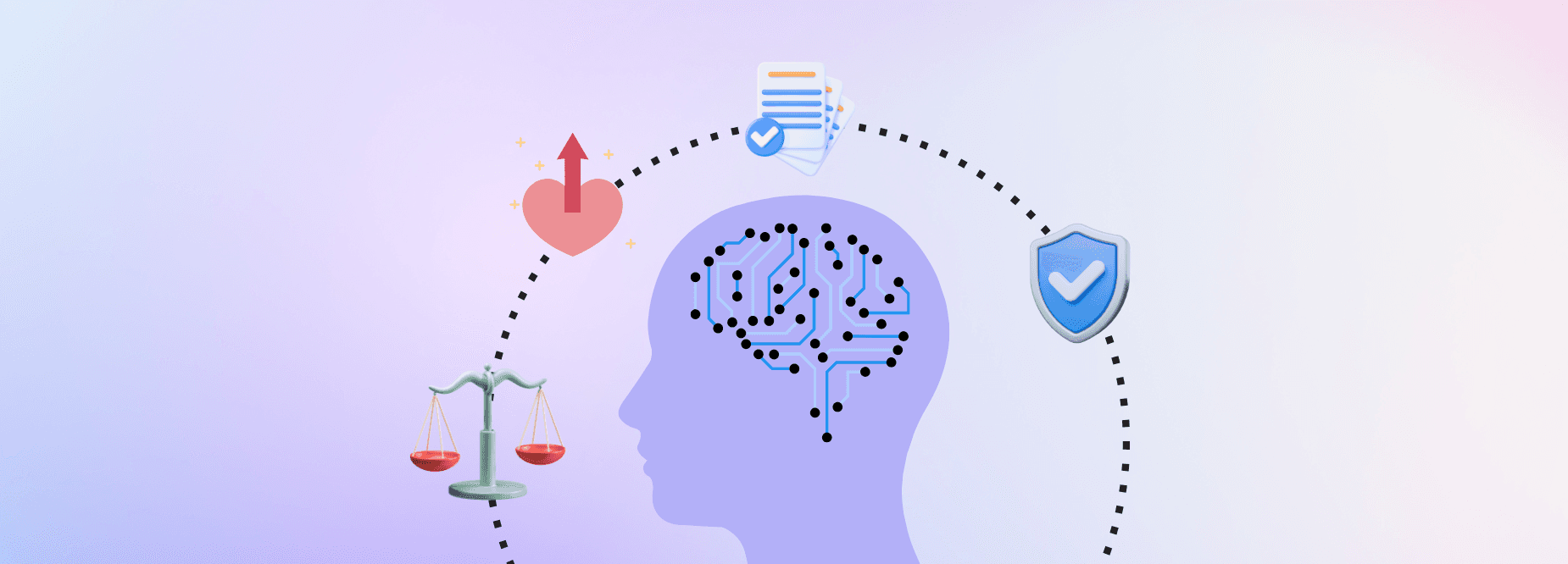
ORA created the Responsible AI Standard, the foundation of Microsoft's governance framework, to ensure that every internal AI project aligns with the six core principles, translating them into concrete requirements for each initiative.
The six principles that guide Microsoft's responsible AI standard
Fairness
AI systems should treat all people fairly. They should allocate opportunities, resources and information in ways that are fair to the humans who use them.
Privacy and security
AI systems should be secure and respect privacy by design.
Reliability and safety
AI systems should be reliable and safe, performing properly across different contexts and conditions.
Inclusiveness
AI systems should empower and engage everyone, regardless of background, striving to be inclusive of people of all abilities.
Transparency
AI systems should ensure that people properly understand their capabilities.
Accountability
People should be accountable for AI systems, with oversight so that humans can retain responsibility and stay in control.
ORA advises the Microsoft Board of Directors and works with teams across the company to apply responsible AI principles through policies and mandatory assessments on every AI project. The Responsible AI Council, led by figures such as Kevin Scott and Brad Smith, provides direction and drives both compliance and innovation in AI. Each division has expert leads and champions who review processes and support teams in their AI development initiatives.
Implementing AI governance in Microsoft's IT organization
As members of the company's IT organization, the team responsible for the AI division and the Microsoft Digital champions group play a special role. These people collaborated on developing a critical internal workflow tool that is now a mandatory part of the responsible AI assessment process.
"The key is ensuring full alignment of responsible AI practices with ORA," says Naval Tripathi, principal engineering manager and co-lead of the Microsoft Digital Responsible AI Team. "ORA has established clear principles and a step-by-step framework and assessment tool. Our responsibility is to follow this process rigorously and ensure compliance across all of our products and initiatives."
This tool registers every project, guides AI developers through initial impact assessments and final reviews, and streamlines those workflows for the champions. By simplifying the process through a unified portal, the tool increases efficiency and minimizes the errors that can arise from manual processes. It also encourages teams to build responsible AI into the software development lifecycle (SDL) as a fundamental part of it, rather than as an add-on requirement or an afterthought.
"As organizations develop a diverse ecosystem of AI agents, often built by multiple engineering teams, it becomes essential to establish a standardized assessment process," says Thomas Po, senior product manager working on Campus Services agents. "That ensures all agents adhere to enterprise-level standards before we deploy and distribute them to end users. That makes it more manageable in the long run, and having it all in one tool gives us more transparency."
Microsoft's internal process for responsible AI governance begins with registering every new system in a dedicated portal, where key details are entered, such as the title, the description, the responsible team and the scope of the project. Based on the system's characteristics, the tool defines the requirements and reviews needed, particularly for external-facing applications or those handling sensitive information.
Next comes a thorough assessment, in which developers must provide documentation on data use, potential risks and mitigation measures. This assessment involves specialists in responsible AI, security and privacy, who examine critical cases in depth before authorizing the project's deployment.
If the project meets all the requirements and reviews, it can move forward. Rather than acting as an obstacle, this process guides teams and gives them expert feedback during development.
"The tool captures all of ORA's requirements and brings them into a workflow that's easy for developers to use," says Padmanabha Reddy Madhu, senior product manager and responsible AI champion for employee productivity engineering at Microsoft Digital. "It's also a great way to bring AI champions into the design phase so we can support our colleagues' work."
How Microsoft applies AI to improve internal processes and employee experiences
With more than 80 AI projects currently underway at Microsoft Digital, registration and optimization are essential. Teams are working on a range of ways to strengthen business processes and employee experiences, as shown by the following examples from Campus Services, which can be accessed through the employee self-service agent:
- The facilities agent lets employees report issues such as burned-out light bulbs or damage in the offices. Doing so generates a ticket for the maintenance team, and the employee can follow up on the case.
- The campus events agent helps organize and discover in-person activities, such as workshops or talks, making it easier for attendees to find and plan around the events that interest them.
- The dining agent answers questions about the daily menus at campus restaurants, handling natural-language queries such as “Where can I find teriyaki today?” and improving accessibility, especially for people with dietary restrictions.
The organization's policies and practices have built a culture of accountability and trust into internal AI development processes. With that support, teams have the confidence they need to experiment.
"When we started, engineers weren't really sure what to do with AI and how to do it responsibly, so the default was to restrain their own momentum," says Monika Gupta, general manager of partners leading Microsoft Digital's Employee Productivity Engineering team. "Now they know we have responsible AI built into our practices and our technology as part of an organic process that grows from a root of culture, so they have more confidence in the solutions."
Far from being a burden, responsible AI assessments provide an additional review that reduces risk and speeds up processes, benefiting teams and preventing delays.
Key lessons for building responsibility into AI development
The team has identified valuable lessons for anyone starting AI projects. Among them is the importance of empowering enthusiastic people as responsible AI champions and giving them the right training.
Fostering an organizational culture of trust and continuous learning makes it easier to embed good practices. Aligning AI assessment processes and tools with the team's real needs is essential, always putting procedures ahead of technology solutions.
Finally, they emphasize that accuracy depends on data quality, and that it is critical to counter bias through constant testing and thoughtful analysis.
"What we're doing is completely novel in the world of technology," says Jamian Smith, principal product manager and co-lead of the Microsoft Digital Responsible AI Team. "Microsoft is really the leading learner here, and we have a passion for corporate citizenship that we're building into our tools."
Building responsibility into AI development means establishing principles aligned with the organizational culture and empowering the people who drive good practices. Having the right tools and processes makes it easier to create safe, responsible solutions from the very start of the development cycle.
"It's not about how fast you can move, it's about how prepared you are," says Tripathi. "Responsible AI processes can look like obstacles to speed, but ultimately they're accelerators."
By making responsible AI a priority, any organization can ensure that the artificial intelligence revolution is genuinely human.