Inventory Costing Methods in Dynamics 365 Business Central
The Business Central inventory valuation process determines whether costing is capitalized and whether an actual value or a budgeted value is used.

The inventory valuation process determines whether costing is capitalized and whether an actual value or a budgeted value is used. Along with the posting date and the sequence, the costing method also influences how the cost flow is posted.
In Dynamics Business Central you can use the following valuation methods:
First In, First Out (FIFO)
The unit cost of an item is the actual value of any receipt of the selected item under the FIFO rule. In addition, with the FIFO method, inventory valuation assumes that the first item to enter inventory will be sold first.
You should consider using it in business environments where the cost of items is stable. When prices rise, the balance sheet shows the higher value, which means that tax liabilities increase, but credit scores and the ability to borrow cash improve.
You should also consider using it in business environments where items have a limited shelf life, since older items must be sold before they pass their sell-by date.
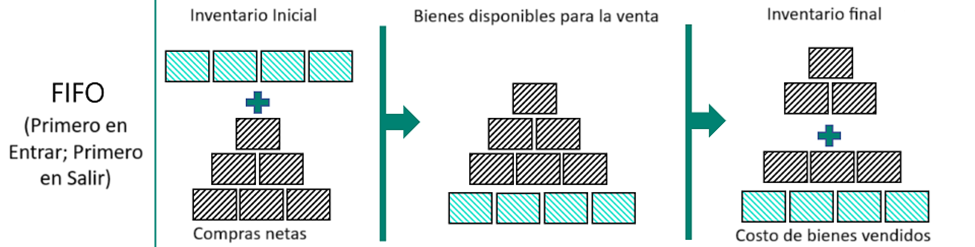
Some characteristics of this costing method are:
- It is a costing method that is easy to understand and implement
- The application process keeps track of the remaining quantity.
- The adjustment process forwards costs according to the settlement of the quantity.
- The revaluation process only revalues the invoiced quantity
- Revaluation can be done per item or per item ledger entry
- Revaluation can be done retroactively
- If you specify a back-date for an inventory decrease, existing entries will NOT be reapplied to provide a correct FIFO cost flow
Last In, First Out (LIFO)
The unit cost of an item is the actual value of any receipt of the selected item under the LIFO rule. In addition, with the LIFO method, inventory valuation assumes that the last item to enter inventory will be sold first.
Many countries do not allow the use of the LIFO method, since it can be used to weaken earnings. When prices rise, the value on the income statement decreases, which translates into lower tax liabilities and a weakened ability to borrow cash.
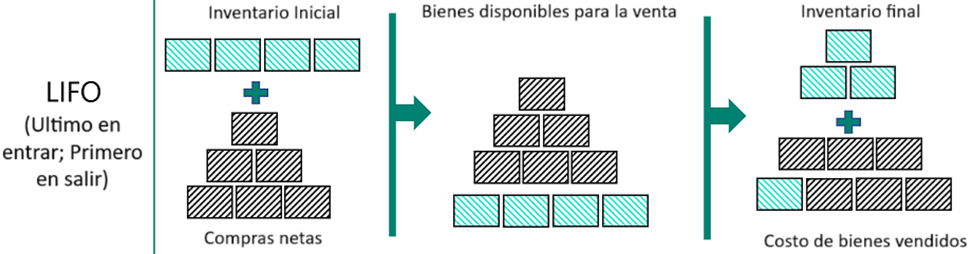
The characteristics of this costing method are the same as the FIFO method, so they are not expanded on in this section.
Average
The unit cost of an item is calculated as the average of unit costs at each point in time after a purchase. Inventory valuation assumes that all inventories will be sold simultaneously.
It is recommended in business environments where the cost of items is unstable. It is also recommended when inventories are piled up or mixed together and cannot be told apart, such as chemical substances.
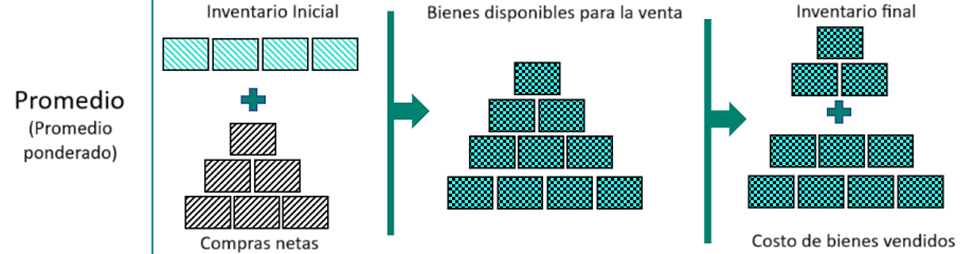
Some characteristics of this costing method are:
- It is based on period options (Day, Week, Month, Quarter or Accounting period)
- It can be calculated per item or per combination of item, location and variant.
- The application process keeps track of the remaining quantity.
- Costs are calculated and posted by the valuation date.
- Revaluation is only done on the invoiced quantity
- Revaluation can only be done per item
- Revaluation can be done retroactively
- If you back-date an inventory increase or an inventory decrease, the average cost is recalculated and all affected entries are adjusted.
- If the period or the calculation type changes, all affected entries must be adjusted.
Specific
The unit cost of an item is the exact cost at which the particular unit was received.
Consider using it in manufacturing environments or in trade of easily identifiable items with relatively high unit costs. Also in the case of items that are subject to regulations, and also for items with serial numbers.
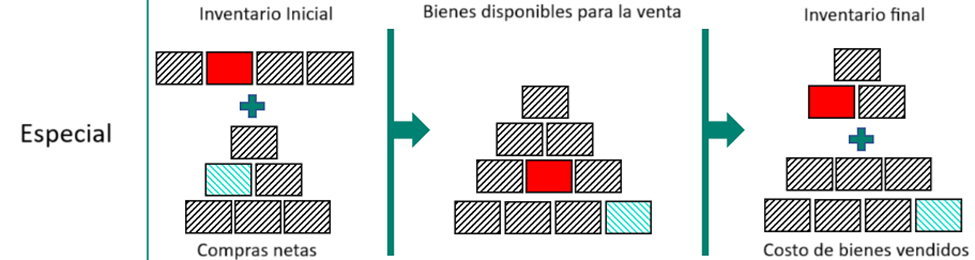
Some characteristics of this costing method are:
- It requires item tracking on both the inbound and the outbound transaction.
- It is normally used for serialized items.
- All settlements are fixed.
- It revalues only the invoiced quantity.
- It can be revalued per item or per item ledger entry
- Revaluation can be done retroactively
- You can use specific item tracking without using specific inventory valuation.
- The cost will not follow the lot number, but the assumed cost of the selected costing method.
Standard
The unit cost of an item is preset based on an estimate. When the actual cost is realized later, the standard cost must be adjusted to the actual cost through variance values.
Consider using it when cost control is critical. Also in repetitive manufacturing environments, to set the value of direct material, direct labor and manufacturing overhead costs. There is also the discipline and the staff to maintain the standards.
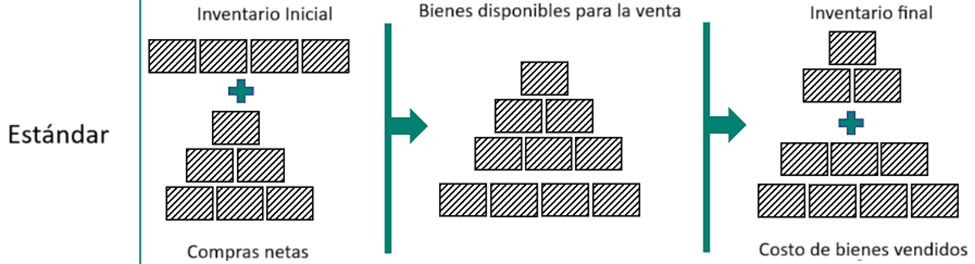
Costing methods vary in the way inventory decreases and in whether actual cost or standard cost is used as the valuation base.
Some characteristics are:
- It is easy to use, but it requires skilled maintenance.
- Application keeps track of the remaining quantity.
- Application is based on FIFO.
- It revalues invoiced and non-invoiced quantities.
- It can be revalued per item or per item ledger entry
- It can be revalued retroactively
- Use the Standard Worksheet page to periodically update and distribute standard costs.
- It is not supported by UA.
- There is no historical record for standard costs.
Example of the effect of costing methods on inventory increases and decreases
Let us look at some examples of how the different inventory valuations affect inventory value. The following table shows the inventory increases and decreases that the examples are based on.
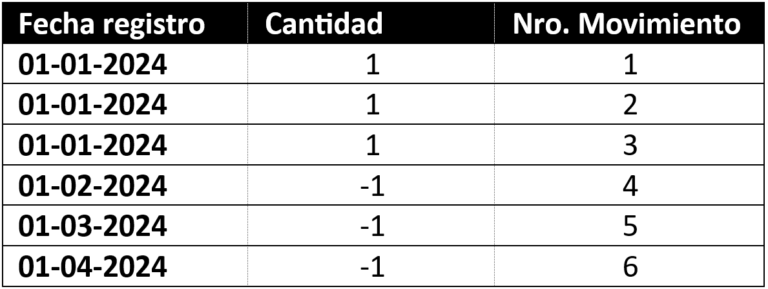
The resulting quantity in inventory is zero. Therefore, the inventory value must be zero, regardless of the costing method.
Effect of costing methods on the valuation of inventory increases.
In the case of items with costing methods that use actual cost as the valuation base (FIFO, LIFO, Average or Specific), inventory increases are calculated according to the purchase cost of the item.
In the case of items where the Standard costing method is used, inventory increases are calculated according to the current standard cost.
Effect of costing methods on the valuation of inventory decreases.
FIFO
For items that use the FIFO method, the items that were purchased first are always sold first (entry numbers 3, 2 and 1 in this example). Therefore, inventory decreases are calculated at the value of the first inventory increase.
COGS is calculated from the value of the first acquisition of the inventory.
The following table shows how inventory decreases are valued for FIFO inventory valuation.

LIFO
For items that use the LIFO method, the items that were purchased most recently are always sold first (entry numbers 3, 2 and 1 in this example). Therefore, inventory decreases are calculated by taking the value of the last inventory increase.
COGS is calculated from the value of the most recent acquisitions of the inventory.
The following table shows how inventory decreases are valued for LIFO inventory valuation.

AVERAGE
In the case of items that use the Average costing method, inventory decreases are valued by calculating a weighted average of the inventory remaining on the last day of the average cost period in which an inventory decrease was posted.
The following table shows how inventory decreases are valued for average inventory valuation.

STANDARD
For items with the standard costing method, inventory decreases are valued in a way similar to the FIFO costing method, except that valuation is based on a standard cost and not on the actual cost.
The following table shows how inventory decreases are valued for standard inventory valuation.

SPECIFIC
Costing methods determine the cost flow from an inventory increase to an inventory decrease. However, if more accurate information about the cost flow exists, you can override this assumption by creating a fixed settlement between the entries. A fixed settlement creates a link between an inventory decrease and a specific inventory increase and directs the cost flow accordingly.
In the case of items with the SPECIFIC cost management method, inventory decreases are valued according to the inventory increase that the fixed application links them to.
The following table shows how inventory decreases are valued for Specific inventory valuation.