
Artificial intelligence (AI) is evolving fast. In 2025, so-called "AI agents" are shaping up to be one of the most promising technologies. What exactly are they? How can they transform businesses? And what challenges do companies face when implementing them?
This article offers a clear, straightforward look at the current state of AI agents, their most relevant uses and how to prepare for their arrival.
What are AI agents?
AI agents are intelligent systems that not only analyze data and make decisions, but also act on their own. Unlike traditional virtual assistants, these agents can carry out tasks autonomously, interact with people or systems, and respond to events without human intervention.
In other words, they are like invisible assistants working in the background to improve processes, solve problems and make daily work easier.
From decision to action
For years, AI has been part of tools such as chatbots and voice assistants. However, recent advances in language models from OpenAI, Microsoft and NVIDIA have made it possible for these systems not only to think, but also to act.
Thanks to new techniques such as "chain of thought" and "ReAct," AI agents can plan, reason and use other tools to achieve their goals. This marks a new stage in the evolution of artificial intelligence.
Where will they be used first?
AI agents have applications across many sectors, but not all of them are moving at the same pace. According to the analysis, companies will be the first to adopt this technology, especially in areas such as financial services and healthcare.
Why? Because these sectors handle complex decisions that directly affect customers. For example, determining whether a person qualifies for a financial product, or detecting fraud in real time.
What benefits do they offer?
AI agents can:
- Automate repetitive tasks
- Improve customer service
- Streamline internal processes
- Reduce human error
- Make faster, more accurate decisions
For companies, this means greater efficiency and better results. For customers, a smoother and more personalized experience.
Obstacles along the way
Although the potential is enormous, implementation will not be simple. There are several challenges organizations need to consider:
Lack of awareness among consumers
While companies show enthusiasm for AI, many consumers still do not trust it. Only a minority are familiar with these technologies, which can slow their adoption in consumer-facing products.
A fragmented market
Right now there are many solutions labeled as "AI agents," but few meet all the necessary requirements. Companies have to navigate a landscape of isolated tools and look for combinations that actually work.
Outdated practices
Traditional automation methods do not adapt well to AI agents. A new way of thinking about processes is needed, with a focus on flexibility, autonomy and human-machine collaboration.
Ethical and legal risks
AI agents can make mistakes, misinterpret instructions or act unexpectedly. On top of that, they must comply with laws such as the AI Act and other local regulations. Companies need to set clear boundaries and oversight systems.
The most relevant use cases
Forrester identified five key areas where AI agents can make a difference:
- Automated customer service
- Internal business processes
- Fraud prevention
- Medical data management
- Interaction with enterprise systems
The financial services and healthcare sectors are leading the way, but others such as retail, education and logistics are also exploring their potential.
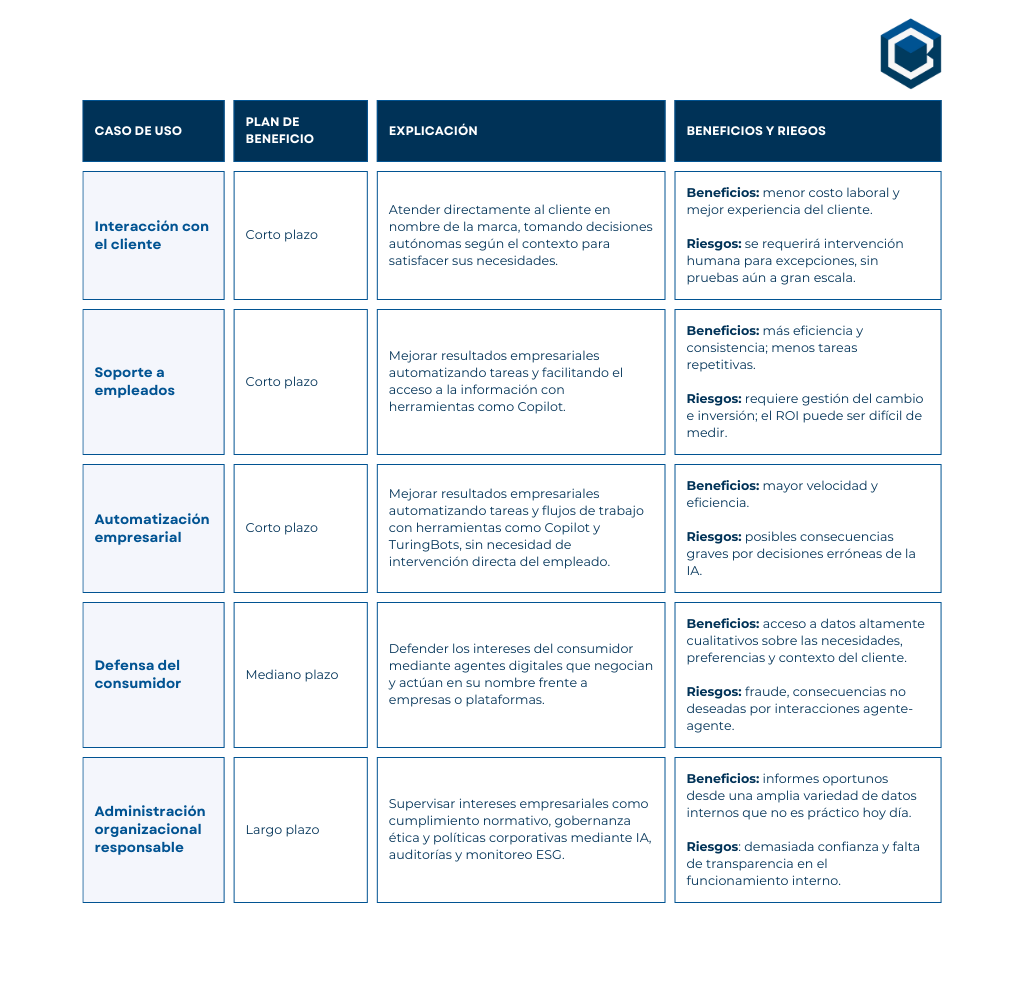
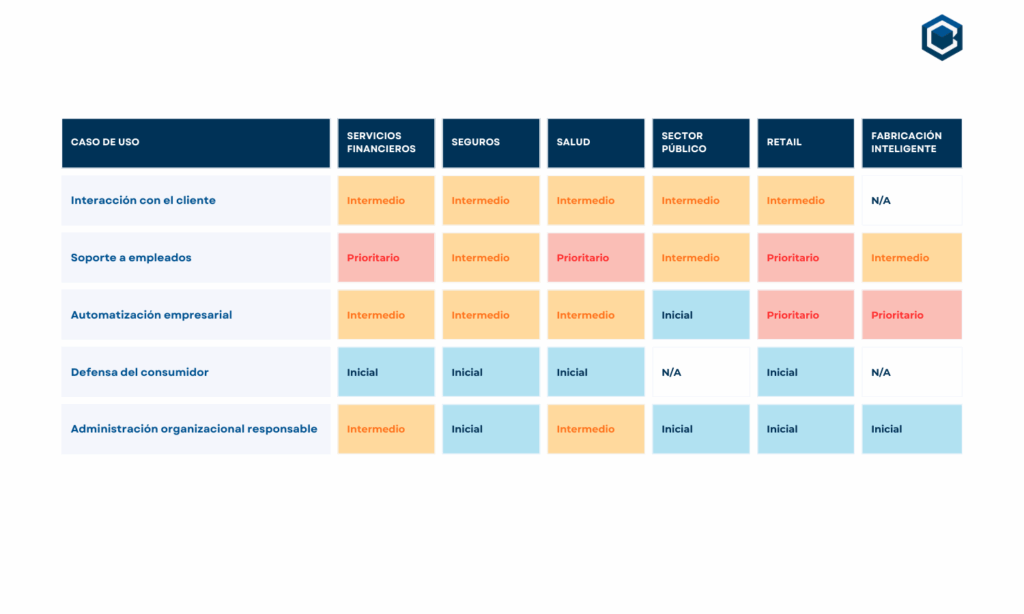
Figure 2. AI agent use cases lean toward financial services and healthcare today.
How do you prepare to implement AI agents?
The key is planning ahead. Here are some recommended steps:
Define clear objectives
Before adopting this technology, it is important to know what you want to achieve. Which tasks will be automated? What benefits do you expect? How much control will the agent have?
Train your team
Employees need to understand how to work with AI agents. That includes learning new skills, such as prompt engineering, and being aware of the ethical and privacy risks.
Monitor and adjust
Once they are up and running, agents need to be monitored constantly. It is essential to have real-time logs of their actions, errors, costs and response times.
Design with alignment in mind
Use a collaborative approach to design agents that respect the company's values. Involve leaders, employees and customers in the process. This will help avoid bias, errors and misunderstandings.
Are you ready for the change?
AI agents are not science fiction. They are a reality that is taking shape quickly. While implementing them requires effort, planning and care, the benefits can be enormous.
Companies that prepare now will be better positioned to take advantage of this technology and lead in their respective sectors.